
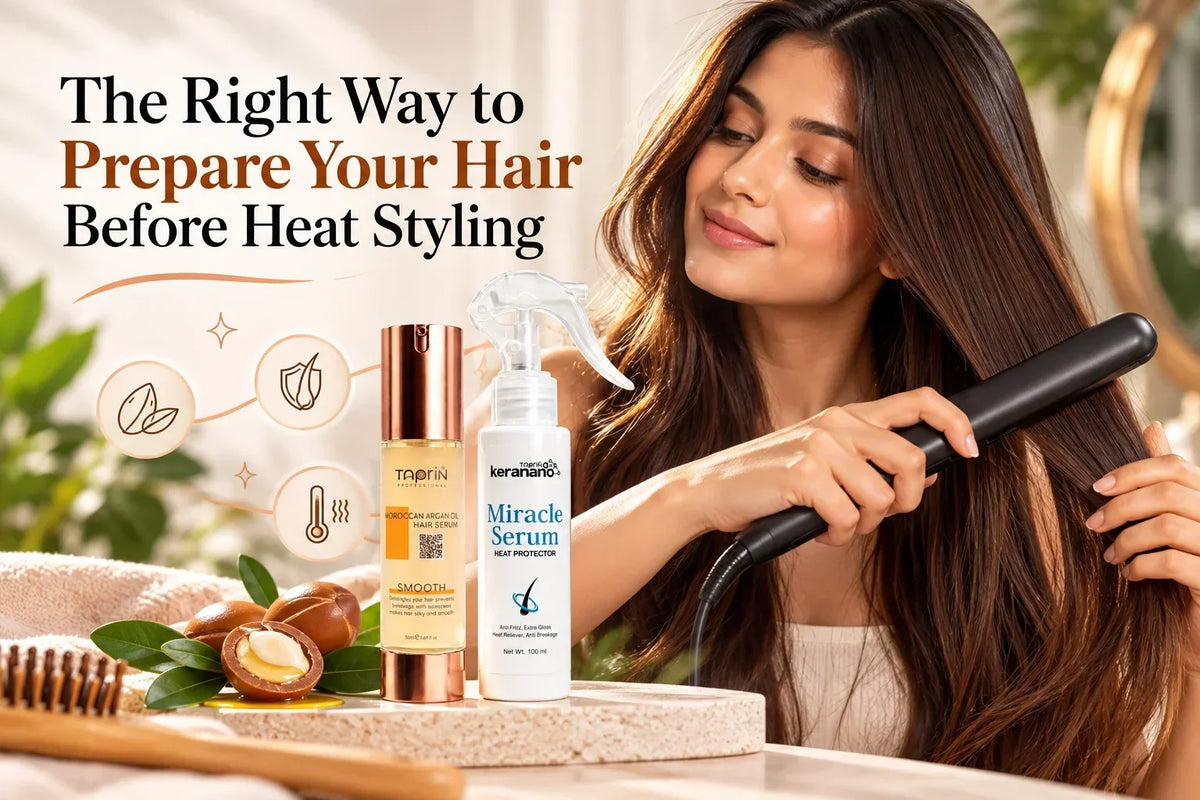
Heat styling can make it easier to create sleek straight hair, defined curls, waves, or a polished blow-dried look. However, frequent exposure to straighteners, curling irons, and blow dryers can affect the hair's moisture balance and outer protective layer. This is why preparation should happen before the styling tool touches your hair.
A proper pre styling routine can help reduce the impact of heat while keeping hair smoother, shinier, and easier to manage. The key is not to avoid heat styling completely, but to combine heat protection with appropriate hair care and better styling habits.
Why Does Hair Need Protection Before Heat Styling?
Hair is made primarily of keratin, a protein that contributes to its structure and strength. The outer layer of the hair strand is called the cuticle. Repeated exposure to high temperatures can affect this protective layer and contribute to dryness, roughness, frizz, and breakage. Heat can also contribute to moisture loss from the hair. Over time, repeatedly styling without adequate protection may leave strands looking dull and feeling less manageable.
Using a heat protection hair spray before styling creates a protective layer around the hair strands and helps reduce the direct effects of heat exposure. Heat-protection products are specifically designed to provide thermal protection while supporting smoothness and manageability.
Step 1: Start With Clean, Properly Conditioned Hair
Preparing your hair starts in the shower. Excess oil, dirt, and product buildup can make styling more difficult and may prevent styling products from distributing evenly.
Choose a suitable shampoo and follow it with a conditioner appropriate for your hair's needs. Conditioning helps improve softness and manageability, making the hair easier to detangle before heat styling.
After washing, avoid vigorously rubbing your hair with a towel. Wet hair can be more vulnerable to mechanical stress, so gently squeeze out excess water and pat the hair instead.
Step 2: Detangle Hair Gently
Before reaching for a straightener or curling tool, remove tangles carefully. Use a suitable wide tooth comb or detangling brush and work gradually through the hair. Start closer to the ends and slowly move upward toward the mid-lengths.
This approach can reduce unnecessary pulling and help minimise mechanical stress before heat is introduced.
A simple preparation sequence:
- Wash your hair.
- Condition thoroughly.
- Gently towel-dry.
- Detangle from the ends upward.
- Apply your heat-protection product.
- Allow the hair to become appropriately dry before using hot tools.
Step 3: Apply Heat Protection Before Styling
This is one of the most important steps in a heat-styling routine.
A heat protection hair spray is designed to form a lightweight protective layer around the hair strands. This layer helps reduce the direct impact of high temperatures and can support smoother-looking hair during styling.
Apply the spray evenly rather than concentrating a large amount on one section. Make sure the lengths and ends receive adequate coverage, as these areas can often be more vulnerable to dryness and damage.
Always follow the individual product's application instructions because formulas can differ.

Step 4: Add Nourishment and Shine With Hair Serum
Heat protection is important, but preparation can also include nourishment and frizz control.
An argan oil hair serum can be used as part of a hair-care routine to improve smoothness, softness, manageability, and shine. Argan oil is associated with nourishing properties, while hair serums can form a lightweight layer around the strands and help reduce moisture loss.
A small amount is generally enough. Apply it primarily through the mid-lengths and ends rather than directly onto the scalp.
For hair that tends to become dry or frizzy, this step can make the strands easier to manage before and after styling.

Step 5: Make Sure Your Hair Is Ready for the Heat Tool
One important consideration is moisture. Using certain hot tools on excessively wet or damp hair can create additional stress because the water inside the strands can heat rapidly.
Unless the styling tool is specifically designed for use on damp hair, allow your hair to dry appropriately before using a straightener or curling iron.
If you're blow-drying, keep the dryer moving rather than holding concentrated heat on one section for too long.
How to Use Heat Tools More Carefully
Even the best preparation cannot completely eliminate the effects of high temperatures. Your styling technique also matters.
Keep these practices in mind:
- Use the lowest effective temperature for your hair.
- Avoid repeatedly passing the tool over the same section.
- Work with manageable sections rather than large portions of hair.
- Keep hot tools moving when appropriate.
- Avoid holding concentrated heat on one area for too long.
- Give your hair breaks from frequent heat styling when possible.
Where Does Argan Oil Hair Serum Fit Into the Routine?
The timing of a serum depends on the formulation and its directions for use. An argan oil hair serum may be applied to damp or dry hair, with the mid-lengths and ends being the primary areas of application. Product guidance for argan oil serum commonly recommends using a small amount and avoiding the scalp to prevent a greasy appearance.
It can also be useful after styling when the goal is to improve smoothness, control flyaways, and add a polished finish.
For a heat-styling routine, think of the roles separately: thermal protection helps prepare the hair for heat, while serum can provide nourishment, smoothness, frizz control, and shine.
Common Mistakes to Avoid Before Heat Styling
Even a good routine can become less effective when basic mistakes are repeated.
Avoid these habits:
- Skipping heat protection: Styling without a thermal protection product exposes the hair directly to high temperatures.
- Using excessive heat: Higher temperatures are not always necessary for achieving a good result.
- Overusing serum: Too much product can make hair appear heavy or greasy.
- Applying products randomly: Follow the recommended directions for each formulation.
- Repeatedly styling the same section: Multiple passes can increase heat exposure.
- Ignoring the ends: The ends often need extra attention because they are older and can be more prone to dryness and splitting.
Conclusion:
Preparing your hair before heat styling is a simple step that can make your overall hair-care routine more effective. Cleanse and condition the hair, detangle it gently, ensure it is appropriately dry, and use suitable protection before reaching for a hot styling tool.


