
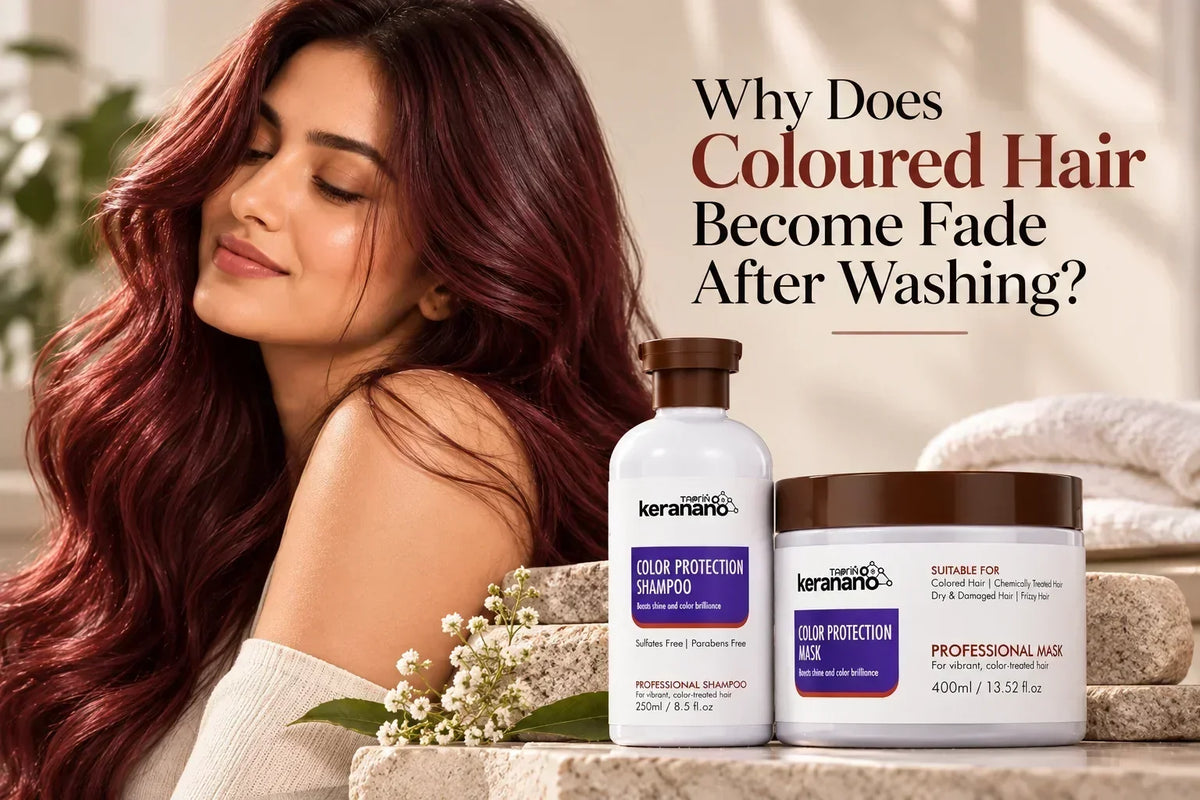
Getting your hair coloured can instantly change your overall look, but maintaining that colour after a salon visit can be challenging. Many people notice that their hair starts looking less vibrant, duller, or slightly different after several washes. This does not necessarily mean that the colour was applied incorrectly. Washing, heat, environmental exposure, and the condition of the hair can all influence how long colour remains visible.
Understanding why colour fades can help you create a more suitable routine and make better choices when selecting hair care products for coloured hair.
What Happens to Hair When It Is Coloured?
Hair colouring can change the structure of the hair. During the colouring process, the hair cuticle is affected so that colour pigments can enter the hair shaft. This process allows the desired colour to develop, but it can also leave chemically treated hair more vulnerable to dryness and moisture loss.
Once the hair has been coloured, maintaining the condition of the cuticle becomes important. A rough or damaged cuticle can make coloured hair feel dry and may contribute to a less vibrant appearance over time.
This is why post colour maintenance should focus not only on preserving the colour but also on maintaining softness, moisture, shine, and manageability.
Why Does Hair Colour Fade After Washing?
Washing is one of the most common factors associated with gradual colour fading. Each time coloured hair is washed, water and cleansing action interact with the hair surface. Frequent washing can gradually affect the appearance of colour, particularly when the hair is already dry or chemically treated.
Several factors can contribute to this process:
- Frequent hair washing
- Harsh cleansing
- Very hot water
- Dry or damaged hair
- Heat styling
- Sun exposure
- Pollution and environmental exposure
- Product buildup
How Does Shampoo Affect Coloured Hair?
The type of shampoo you use can make a difference in a colour-care routine. A color protection shampoo is designed specifically for coloured hair and focuses on gentle cleansing while supporting colour vibrancy, softness, and shine. A sulfate-free cleansing system can provide a gentler washing experience for colour-treated hair.
It can help remove everyday impurities without creating an unnecessarily harsh cleansing experience. This can be particularly useful when coloured hair already feels dry or fragile. However, even a suitable shampoo should be used thoughtfully. Washing more frequently than necessary may still contribute to faster changes in colour appearance.

Does Water Temperature Matter?
Water temperature is another simple factor that people often overlook. Very hot water can make hair feel drier and may affect the overall condition of chemically treated hair. Lukewarm water is generally a more comfortable option when washing coloured hair.
A simple washing routine can include:
- Thoroughly wet the hair and scalp.
- Apply a suitable amount of shampoo.
- Massage gently rather than aggressively rubbing the hair.
- Rinse thoroughly.
- Follow with a conditioner or hair mask.
- Use lukewarm water rather than very hot water.
Why Is Deep Conditioning Important After Colouring?
Colour treated hair can become dry and rough because chemical treatments can affect the hair's structure. When hair loses moisture, it may become more difficult to manage and can appear less shiny.
This is where a color protection hair mask can become useful in a regular routine. A deep-conditioning mask can provide moisture support and help improve the appearance of softness, smoothness, shine, and manageability.
Ingredients used in colour-focused hair care formulations can include Hydrolyzed Pea Protein, Hydrolyzed Hyaluronic Acid, Panthenol (Vitamin B5), Argania Spinosa Kernel Oil, Coconut Oil, and Shea Butter. These ingredients are used in formulations designed to support moisture, softness, smoothness, and healthier-looking hair.

How Often Should You Wash Coloured Hair?
There is no single washing schedule that works for everyone. Hair type, scalp condition, lifestyle, exercise, styling habits, and environmental exposure can all affect how frequently hair needs cleansing.
For many people, washing coloured hair around two to three times a week may be sufficient, although individual requirements can differ.
If the scalp becomes oily quickly, more frequent washing may be necessary. The important point is to avoid unnecessary washing simply out of habit.
Everyday Habits That Can Cause Faster Fading
Your washing routine is only one part of colour maintenance. Daily habits can also influence how coloured hair looks.
Watch Out for Excessive Heat
Frequent use of straighteners, curling tools, and high-temperature styling can contribute to dryness and damage. If heat styling is necessary, using suitable heat-protection care can help support the hair.
Protect Hair From the Sun
Extended exposure to sunlight can affect the appearance of coloured hair. When spending considerable time outdoors, covering the hair can provide an additional layer of protection.
Avoid Rough Handling
Wet hair can be more vulnerable to mechanical stress. Gentle towel drying and careful brushing can help reduce unnecessary pulling and breakage.
Don't Ignore the Hair Ends
The mid-lengths and ends often require additional conditioning because they are older parts of the hair fibre. Applying a color protection hair mask primarily through the mid-lengths and ends can provide targeted conditioning care.
Building a Simple Coloured Hair Care Routine
You do not need an overly complicated routine to maintain coloured hair. A consistent approach can be easier to follow.
A basic routine can look like this:
Step 1: Wash with a Color Protection Shampoo when cleansing is required.
Step 2: Rinse thoroughly using lukewarm water.
Step 3: Follow with conditioner or a color protection hair mask.
Step 4: Allow the hair to dry gently and minimise unnecessary heat styling.
Step 5: Use suitable hair care products according to your hair's condition and styling requirements.
How to Choose Hair Care Products for Coloured Hair
When choosing hair care products, look for options that address more than just colour appearance. Coloured hair may also need support for dryness, softness, smoothness, shine, and manageability.
Consider:
- Whether the cleansing formula is suitable for coloured hair
- Whether the routine provides sufficient moisture
- Whether a deep conditioning mask is needed
- How frequently you use heat styling tools
- Whether your hair has undergone additional chemical treatments
- Whether your scalp and hair have different needs
Conclusion:
Coloured hair naturally requires more attention because the colouring process can affect the hair cuticle and make the hair more vulnerable to dryness and external stress. Frequent washing, harsh cleansing, hot water, heat styling, and environmental exposure can all contribute to changes in colour appearance over time.
Also Read>> How to Maintain Colored, Highlighted, and Grey Hair: The Ultimate Color Protection Guide


