
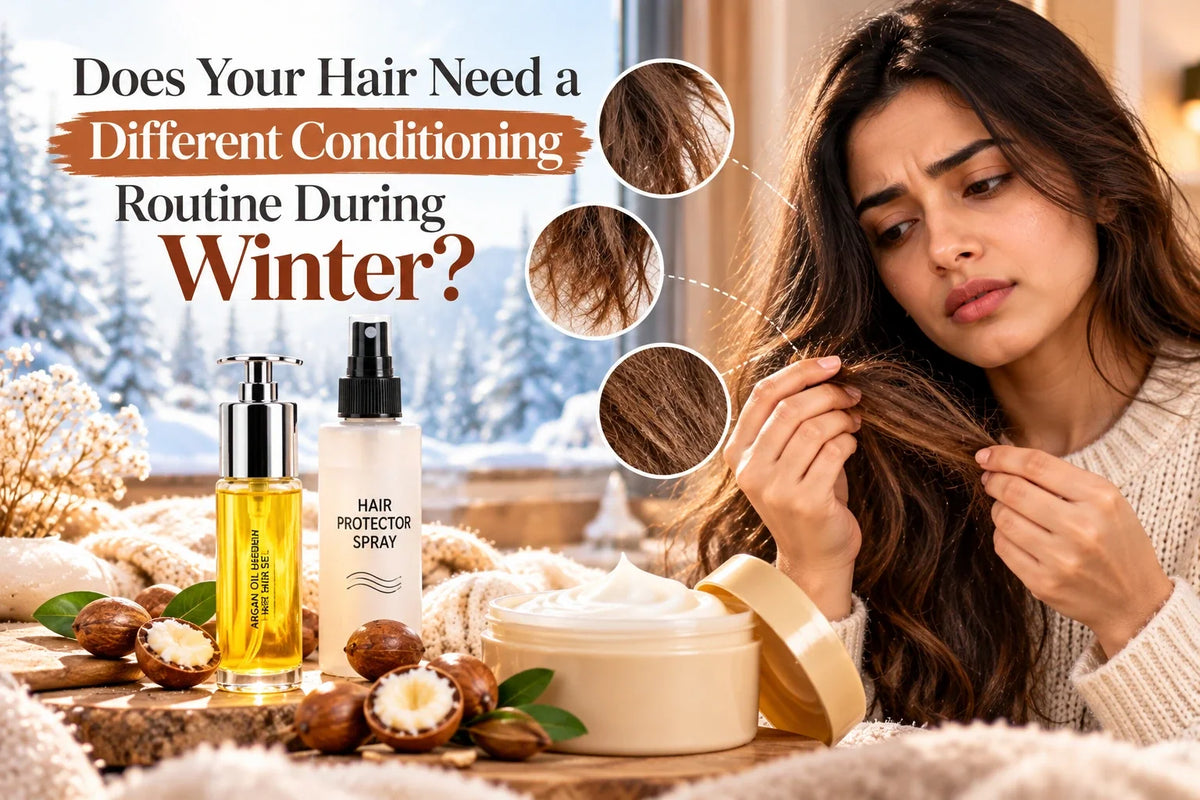
Winter can change how your hair feels, looks, and responds to everyday care. You may notice increased dryness, frizz, rough ends, or hair that becomes difficult to detangle. Even if your regular haircare routine works well during warmer months, colder weather may create different conditioning needs.
Low humidity, cold winds, indoor heating, and frequent use of hot water can contribute to moisture loss and make hair feel less manageable. Understanding these seasonal changes can help you adjust your conditioning routine to maintain softer, smoother, and healthier-looking hair throughout winter.
Why Does Hair Become Drier During Winter?
1. Low Humidity and Moisture Loss
Cold weather often brings lower humidity, which can affect the moisture balance of your hair. When hair becomes dry, its outer cuticle may feel rougher, making strands more prone to tangling and friction.
This can result in frizz, reduced smoothness, and difficulty managing the lengths. Hair that is already chemically treated, coloured, or heat-styled may require additional conditioning because it can be more vulnerable to dryness and breakage.
2. Hot Water and Indoor Heating
Hot showers may feel relaxing during winter, but excessively hot water can remove natural oils from the scalp and hair. Indoor heating can also make the surrounding air drier, contributing to discomfort and roughness.
To reduce these effects:
-
Wash your hair with lukewarm water instead of very hot water.
-
Avoid shampooing more frequently than your scalp requires.
-
Apply conditioner to the lengths and ends after washing.
-
Gently squeeze out excess water before applying conditioning products.
These small changes can help your hair retain a smoother feel without requiring an entirely new routine.
Does Your Hair Need More Conditioning in Winter?
Your hair may benefit from additional conditioning during winter, but the amount depends on its texture, porosity, length, and existing condition.
Conditioners help improve softness, reduce friction between strands, and make detangling easier. Hair that feels rough or becomes tangled quickly may need more consistent conditioning, while fine hair may become weighed down by excessively rich products.
Look for changes in your hair rather than following a fixed seasonal rule. If your strands feel rough immediately after washing, your ends tangle frequently, or brushing causes excessive pulling, it may be time to review your routine.
How to Adjust Your Winter Haircare Routine
A winter routine should focus on gentle cleansing, regular conditioning, and reducing unnecessary friction.
-
Choose a suitable shampoo: Cleanse your scalp according to its oiliness and buildup without repeatedly washing the lengths.
-
Condition after washing: Apply conditioner mainly to the mid-lengths and ends, following the product instructions.
-
Add deeper conditioning when needed: A moroccan hair mask can be incorporated into your routine when your hair feels particularly dry, rough, or difficult to manage.
-
Protect your hair during styling: Reduce excessive heat exposure and use appropriate heat-protection products when styling tools are necessary.
-
Maintain regular care: Adjust the frequency of conditioning according to how your hair responds instead of automatically increasing every product.
A consistent routine can help improve manageability while avoiding unnecessary product buildup.
Can Hair Masks Help With Winter Dryness?
Hair masks are designed to provide more intensive conditioning than many everyday conditioners. Depending on their formulation, they can help improve the feel of dry hair, reduce roughness, and make strands easier to detangle.
A moroccan hair mask may be useful when hair feels coarse, lacks smoothness, or becomes difficult to manage during colder months. Hair that has undergone colouring, chemical treatments, or frequent heat styling may particularly benefit from a carefully selected conditioning treatment.
For best results, follow the recommended application time and concentrate on the areas that need conditioning. Applying excessive amounts or using a mask too frequently may leave some hair types feeling heavy.
Remember that conditioning improves the feel and manageability of hair but does not permanently repair split ends. Damaged ends may need trimming to prevent further splitting along the hair shaft.
The Role of Hair Serums in Winter
Conditioning does not have to stop when you step out of the shower. Leave-in products can help manage friction, smooth the appearance of the hair surface, and make styling easier.
An argan oil hair serum can be considered when the lengths and ends look dry, frizzy, or difficult to manage. Depending on its formulation, a serum may help improve shine, smoothness, and the appearance of flyaways.
For better results:
-
Start with a small amount.
-
Distribute the product evenly through the lengths and ends.
-
Avoid applying excessive amounts directly to the scalp unless the product is designed for that purpose.
-
Adjust the quantity according to your hair thickness and length.
An argan oil hair serum can complement regular conditioning, but it should not replace shampoo or rinse-out conditioner.
Why Heat Protection Matters During Winter
Many people use blow-dryers and heated styling tools more frequently during winter because air-drying takes longer. Repeated exposure to high temperatures can contribute to dryness, roughness, and breakage.
A hair protector spray formulated for heat protection can help reduce heat-related damage when used according to its directions. However, it does not make hair completely immune to high temperatures.
To minimise unnecessary damage:
-
Use the lowest effective heat setting.
-
Avoid repeatedly passing styling tools over the same section.
-
Allow hair to dry partially before blow-drying when practical.
-
Follow the instructions for your chosen heat-protection product.
A hair protector spray is especially worth considering if your winter routine involves frequent blow-drying, straightening, or curling.
Common Winter Haircare Mistakes to Avoid
Even a good conditioning routine can become less effective when everyday habits increase friction or dryness.
Avoid these common mistakes:
-
Washing with excessively hot water.
-
Rubbing wet hair vigorously with a towel.
-
Brushing aggressively through tangled strands.
-
Applying too much serum or mask at once.
-
Using heated styling tools without appropriate protection.
-
Ignoring persistent scalp itching, flaking, or irritation.
If your scalp becomes persistently irritated or you experience unusual hair loss, consider seeking advice from a qualified dermatologist.
Conclusion
Winter may require a few adjustments to your conditioning routine, particularly if your hair becomes dry, frizzy, rough, or difficult to detangle. Gentle cleansing, regular conditioning, and reduced heat exposure can help maintain softer and more manageable hair throughout the season.
A moroccan hair mask can provide additional conditioning when needed, while an argan oil hair serum may help improve smoothness and manageability. Similarly, a hair protector spray can support heat-protection practices when using styling tools.
Ultimately, the best winter haircare routine depends on your hair's individual needs. Pay attention to changes in texture, avoid unnecessary styling damage, and choose conditioning products according to your hair type rather than following a one-size-fits-all approach.


