
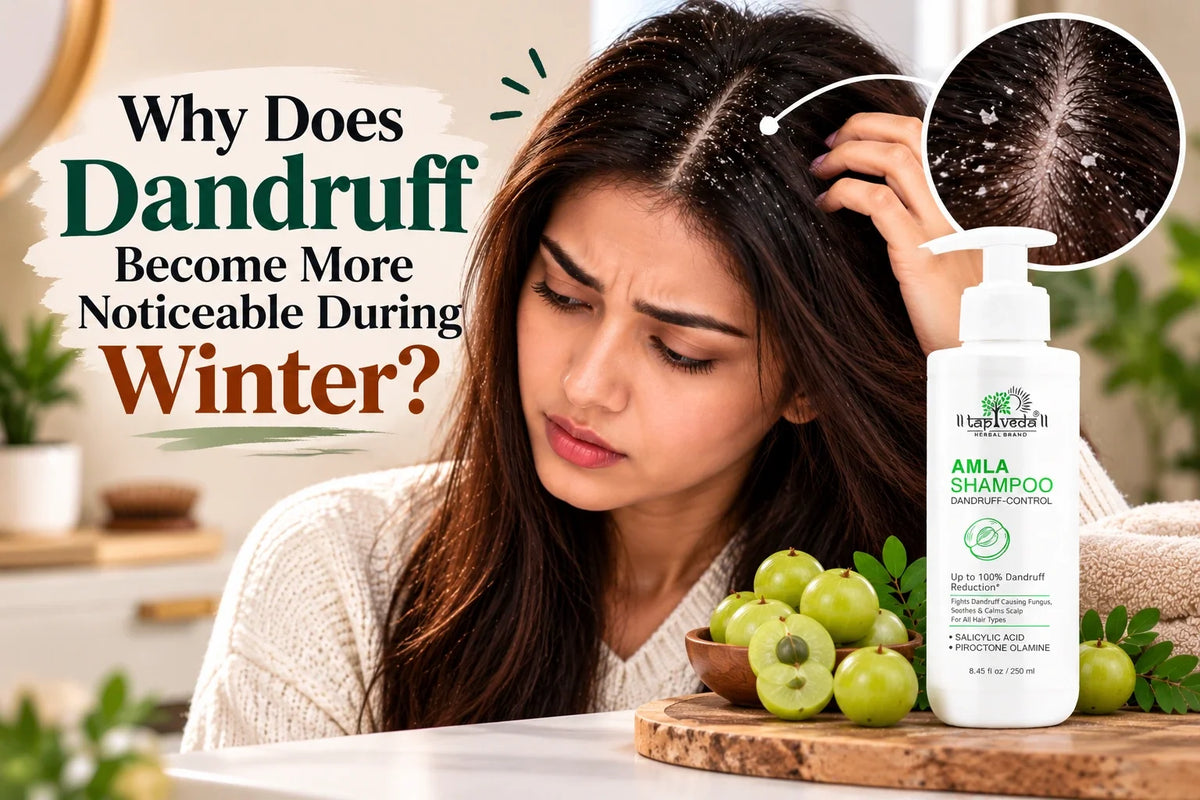
Have you noticed more white flakes on your shoulders or increased scalp itching when winter arrives? Dandruff can become more noticeable during colder months, making hair care more challenging. Changes in temperature, low humidity, hot showers, and scalp care habits can all influence the condition of your scalp.
Although dandruff is a common concern, it is not always caused by a dry scalp. Understanding the difference between dryness and dandruff can help you choose a suitable hair care routine and manage visible flakes more effectively.
Why Does Dandruff Increase During Winter?
1. Cold Weather and Low Humidity
Winter air generally contains less moisture, while indoor heating can further reduce humidity. These conditions may contribute to scalp dryness, leaving the skin feeling tight or uncomfortable. A dry scalp may produce small, loose flakes that become more noticeable when brushing or combing. However, dandruff can also occur on an oily scalp, so dryness is not the only possible cause. Maintaining a balanced scalp care routine is important because excessive dryness and oil buildup can both contribute to scalp discomfort.
2. Hot Showers Can Affect Scalp Comfort
Hot showers may feel relaxing during winter, but very hot water can remove some of the natural oils that help protect the scalp and hair. Frequent washing with harsh cleansers may also leave the scalp feeling dry or irritated.
To avoid unnecessary discomfort:
-
Wash your hair with lukewarm water instead of very hot water.
-
Use a shampoo suited to your scalp condition.
-
Rinse thoroughly to remove product residue.
-
Avoid scratching the scalp with your fingernails.
-
Dry your hair gently without excessive heat.
3. Scalp Oil and Flake Buildup
Dandruff is not always a sign of insufficient moisture. It can also be associated with excess scalp oil and the natural shedding of skin cells. A yeast called Malassezia, which naturally lives on the scalp, can contribute to dandruff in susceptible individuals. When flakes accumulate, they may become visible on the scalp, hair roots, and clothing. Some people also experience itching or irritation. This is why choosing a suitable shampoo matters. The goal is to address the underlying scalp concern without unnecessarily stripping the hair of moisture.
How Can You Tell the Difference Between Dry Scalp and Dandruff?
Dry scalp and dandruff can look similar, but they may have different causes. Dry scalp is often associated with moisture loss and may produce smaller, dry flakes. The scalp may feel tight, particularly after washing.
Dandruff is commonly associated with visible flakes, itching, and sometimes an oily scalp. The flakes may appear white or yellowish, depending on the scalp condition. Pay attention to the symptoms rather than assuming every visible flake is dandruff. Persistent redness, thick scaling, severe itching, or inflammation may indicate another scalp condition that requires professional assessment.
How Can the Right Shampoo Help Manage Winter Dandruff?
Choosing the right shampoo is an important part of managing visible flakes. Different formulations are designed to address different scalp concerns, so the choice should depend on the cause of the problem.
An amla anti dandruff shampoo may be considered as part of a routine focused on dandruff management. When selecting an anti-dandruff formulation, it is useful to understand the role of its active ingredients.
For example:
-
Salicylic acid: Helps loosen and remove accumulated dead skin cells and scalp scaling.
-
Piroctone olamine: An ingredient used in certain anti-dandruff formulations to help manage dandruff-associated microorganisms.
These ingredients serve different purposes and may be included in formulations designed for flaky scalps. Always follow the product's usage instructions, as frequency and suitability depend on the formulation and your scalp's needs.

Winter Scalp Care Habits That Can Make a Difference
A good winter routine should address both scalp cleanliness and hair comfort. You do not necessarily need numerous products to maintain a healthy looking scalp.
Follow these practical steps:
-
Choose an appropriate washing schedule: Wash according to your scalp's oiliness, activity level, and product instructions.
-
Massage gently: Use your fingertips to distribute shampoo without scratching the scalp.
-
Rinse thoroughly: Product residue can contribute to discomfort and buildup.
-
Condition the hair lengths: Apply conditioner mainly to the mid-lengths and ends when needed, particularly if your hair feels dry.
-
Avoid excessive heat: Use moderate temperatures when blow drying and avoid directing hot air at the scalp for prolonged periods.
-
Monitor your scalp: Notice whether itching, flaking, or dryness improves or becomes worse with your routine.
Common Winter Hair Care Mistakes to Avoid
Some everyday habits can make dandruff or scalp discomfort more noticeable.
-
Applying excessive oil to a flaky scalp: Heavy oiling may worsen symptoms for some people, particularly when oiliness is already a concern.
-
Scratching visible flakes: Scratching can irritate the scalp and potentially cause skin damage.
-
Using multiple treatments together: Combining several scalp treatments without understanding their ingredients may increase irritation.
-
Ignoring persistent symptoms: Ongoing flakes and itching may require a medicated treatment or professional advice.
Conclusion:
Dandruff can become more noticeable during winter because of changes in humidity, scalp oil, washing habits, and environmental conditions. However, winter dryness and dandruff are not the same, so identifying the cause is an important first step.


