
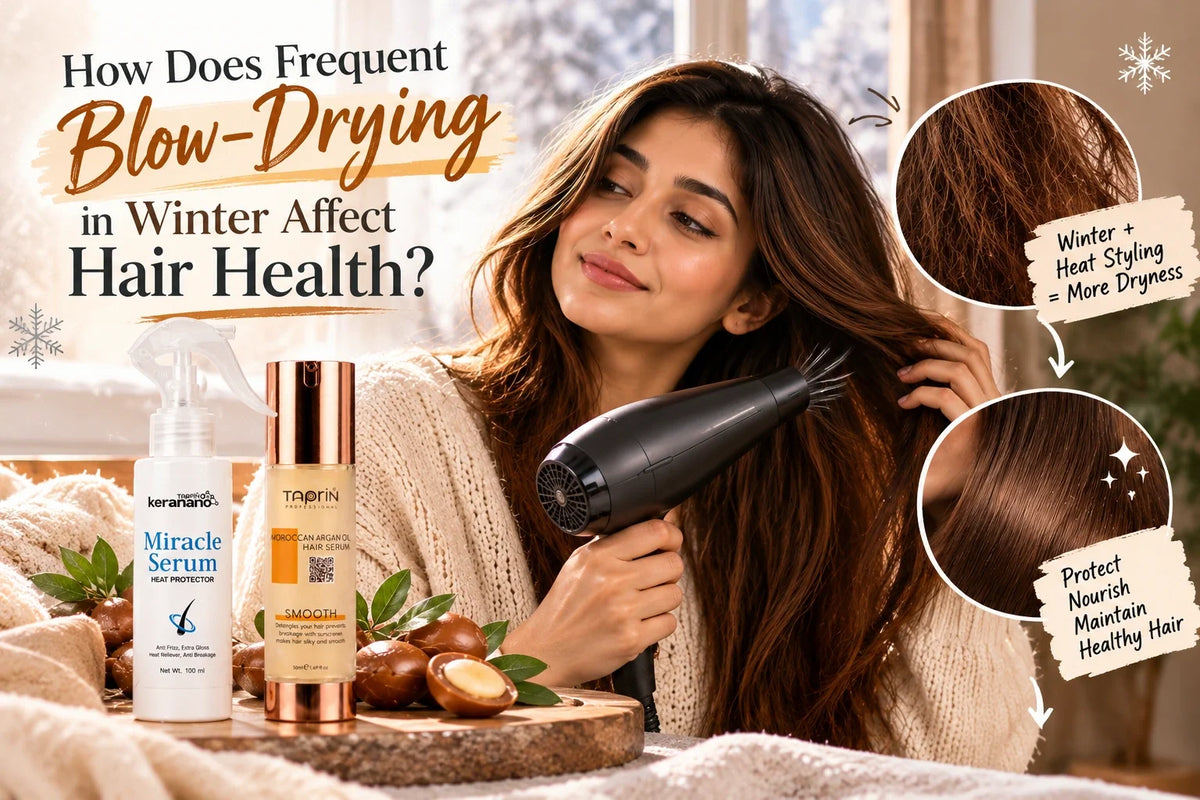
Blow-drying becomes a regular part of many people's hair care routines during winter. Cold weather makes air-drying less comfortable, while damp hair can take longer to dry in certain conditions. Although a blow-dryer offers convenience and helps create a smooth, styled appearance, frequent exposure to heat may affect hair health over time.
Repeated blow-drying can contribute to dryness, frizz, rough texture, and breakage, particularly when the hair is exposed to excessive temperatures. Understanding how heat affects the hair and adopting better styling habits can help you maintain smoother, more manageable hair throughout winter.
Why Does Hair Need Extra Care During Winter?
Winter can make hair feel drier and more difficult to manage. Cold outdoor air, low humidity, indoor heating, and friction from woollen clothing can contribute to dryness and static.
When frequent blow-drying is added to these conditions, the hair may become increasingly difficult to manage.
Common concerns include:
-
Dryness and rough texture
-
Frizz and flyaways
-
Reduced shine
-
Hair breakage and split ends
-
Difficulty maintaining smooth hairstyles
These effects can vary depending on hair type, temperature settings, styling frequency, and the condition of the hair before heat is applied.
How Does Frequent Blow-Drying Affect Hair Health?
1. It Can Contribute to Moisture Loss
Hair contains keratin, a protein that contributes to its structure and strength. The outer protective layer, known as the cuticle, helps protect the inner structure of each strand.
Repeated exposure to high temperatures can affect the cuticle and contribute to moisture loss. As the hair becomes drier, it may feel rougher and appear less shiny.
During winter, this can become particularly noticeable because the surrounding environment may already encourage dryness.
2. It Can Increase Frizz and Roughness
When the hair's outer surface becomes rough or damaged, strands may not lie as smoothly together. This can make the hair appear frizzy, tangled, or difficult to style.
Blow-drying at high temperatures or holding the dryer too close to the hair can increase the risk of heat-related damage.
Using a suitable heat protection hair spray before styling can help reduce the direct effects of heat exposure. However, heat protection does not eliminate all damage, so careful temperature control remains important.
3. It May Contribute to Hair Breakage
Hair that is already dry, chemically treated, or frequently styled with heat may be more vulnerable to breakage.
Repeated pulling with a brush while blow-drying can add mechanical stress to strands already exposed to heat. This may lead to shorter broken hairs and split ends.
To minimise unnecessary stress, use a suitable brush, detangle gently, and avoid repeatedly directing intense heat at the same section.
How to Blow-Dry Your Hair More Safely in Winter
You do not necessarily need to stop blow-drying altogether. Adjusting your technique can help reduce unnecessary heat exposure.
Follow these steps:
-
Remove excess water gently: Use a soft towel to squeeze out excess water instead of rubbing the hair vigorously.
-
Detangle carefully: Work through knots gradually, starting near the ends and moving upwards.
-
Apply heat protection: Distribute a suitable heat protection hair spray according to its instructions before using the dryer.
-
Choose a moderate temperature: Use the lowest effective heat setting and avoid concentrating hot air on one area.
-
Maintain distance: Keep the dryer moving and avoid holding it too close to the hair.
-
Finish with gentle styling: Avoid repeated brushing or additional heat once the hair is dry.
These simple habits can help make winter styling more manageable without exposing the hair to unnecessary heat.
Can Hair Serum Help With Winter Dryness and Frizz?
Hair serums are commonly used to improve smoothness, manageability, and shine. Depending on their formulation, they can help coat the hair surface, reduce friction, and make strands easier to style.
An argan oil hair serum may be useful when hair feels dry, rough, or difficult to manage. Argan oil is associated with conditioning properties, while serum formulations can help improve the appearance of frizz and flyaways.
For best results, apply a small amount through the mid-lengths and ends rather than concentrating the product on the scalp. Follow the product's instructions regarding application to damp or dry hair.
It is important to remember that serum and thermal protection serve different purposes. A serum may improve smoothness and shine, but it should not automatically be treated as a replacement for a dedicated heat-protection product.
Common Blow-Drying Mistakes to Avoid
Even when using suitable hair care products, certain styling habits can increase the risk of damage.
Avoid these common mistakes:
-
Using the highest heat setting every time
-
Blow-drying soaking-wet hair for unnecessarily long periods
-
Holding the dryer close to one section
-
Pulling aggressively with a brush
-
Repeatedly applying heat to already-styled hair
-
Ignoring dryness and split ends
-
Skipping thermal protection before styling
A heat protection hair spray should be applied according to its directions, with adequate coverage across the sections being styled. Using more product than recommended does not necessarily provide better protection.
Building a Winter Hair Care Routine
A consistent routine can help maintain hair softness and manageability during colder months.
Consider incorporating these habits:
-
Use a shampoo suited to your scalp and hair type.
-
Follow cleansing with a suitable conditioner.
-
Include a deep-conditioning hair mask when your hair needs additional conditioning.
-
Use a small amount of argan oil hair serum to improve the appearance of dry lengths and frizzy ends.
-
Reduce unnecessary heat styling and allow your hair to rest between sessions.
-
Get regular trims to manage split ends.
If your hair is coloured or chemically treated, it may require additional conditioning and more careful heat management.
Conclusion
Frequent blow-drying in winter can contribute to dryness, frizz, roughness, and breakage when the hair is repeatedly exposed to excessive heat. Cold weather and low humidity may further affect how manageable your hair feels, making a balanced winter hair care routine especially important.
Use moderate heat settings, keep the dryer moving, detangle gently, and apply suitable thermal protection before styling. A heat protection hair spray can complement careful blow-drying habits, while an argan oil hair serum may help improve softness, smoothness, and shine.
Ultimately, healthier-looking hair depends on combining appropriate products with gentle styling techniques. By reducing unnecessary heat exposure and maintaining consistent conditioning, you can help keep your hair more manageable throughout winter.


