
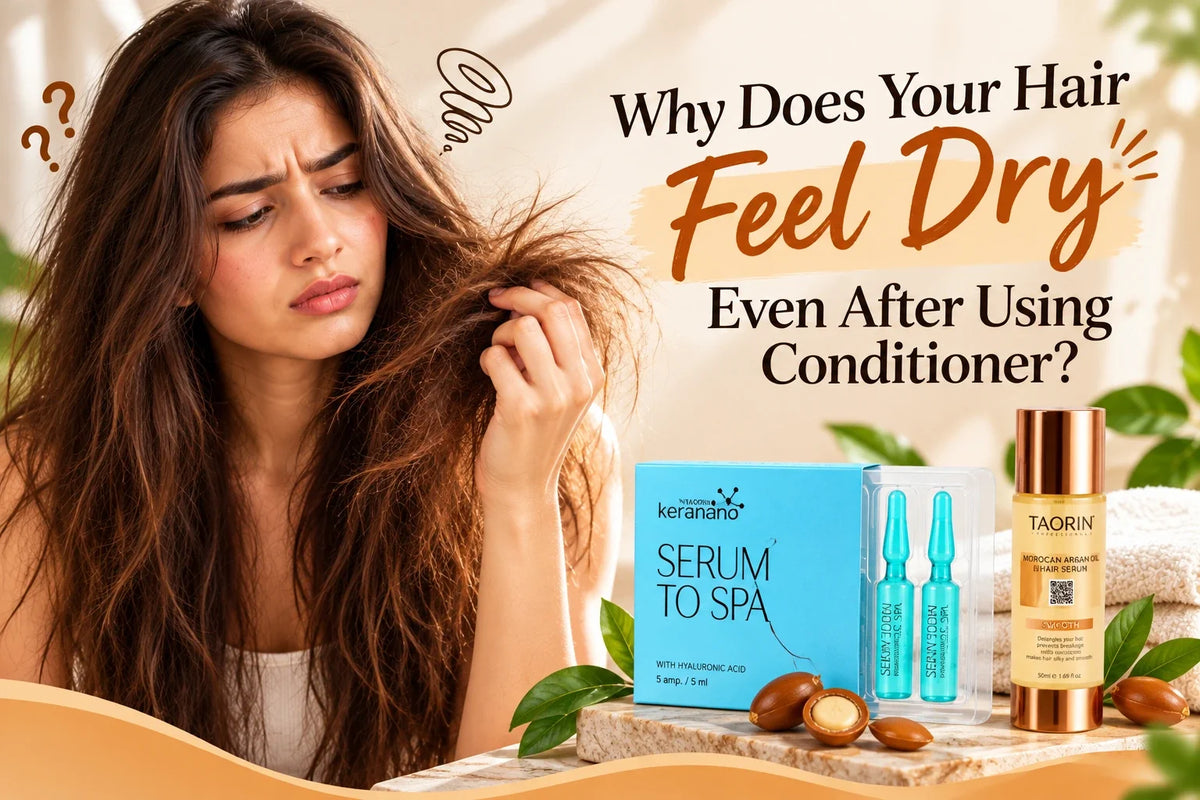
Conditioner is often the first solution people turn to when their hair feels dry, rough, or difficult to manage. However, even after regular conditioning, hair may continue to feel frizzy, look dull, or develop tangles throughout the day. This can be frustrating, especially when you follow a consistent hair care routine.
The reason is that conditioner addresses only certain aspects of hair care. The condition of the hair cuticle, exposure to heat, cleansing habits, environmental factors, and the hair care products you use can all influence how your hair feels. Understanding these factors can help you identify why dryness persists and what changes may improve your hair's texture.
How Conditioner Works and Why It May Not Be Enough
Conditioners are designed to improve hair softness, reduce friction between strands, and make detangling easier. They help smooth the hair surface, allowing strands to feel more manageable after washing.
However, hair that has been exposed to frequent heat styling, colouring, or chemical treatments may have a rough or damaged cuticle. In such cases, regular conditioner may improve the feel of the hair without addressing every concern associated with dryness and damage. This is where intensive conditioning treatments can become useful. A deep repair hair mask is designed to provide more intensive conditioning than a regular rinse-off conditioner. Depending on its formulation, it may help improve softness, reduce roughness, and make dry or frizzy hair easier to manage.

Common Reasons Your Hair Still Feels Dry
Hair Cuticle Damage
The cuticle is the outer protective layer of each hair strand. When it becomes damaged through excessive heat, chemical processing, or rough handling, the hair surface may become uneven. This can make strands feel rough and cause them to tangle more easily. Damaged hair may also lose some of its natural looking shine because its surface no longer reflects light as smoothly.
Although conditioning products can improve manageability, they cannot completely reverse structural damage. Reducing further damage is therefore just as important as choosing suitable treatments.
Excessive Cleansing and Product Buildup
Shampoo helps remove dirt, sweat, excess oil, and styling residue. However, washing too frequently or using a cleanser that is too harsh for your hair can leave the lengths feeling dry. At the same time, an accumulation of styling products and conditioning ingredients can leave a coating on the hair, making it feel heavy, dull, or less responsive to conditioner.
To maintain a better balance:
-
Choose a shampoo suited to your scalp and hair type.
-
Focus shampoo application mainly on the scalp.
-
Rinse thoroughly to remove product residue.
-
Adjust washing frequency according to your hair's needs.
Heat Styling and Environmental Exposure
Frequent use of straighteners, curling irons, and high heat blow dryers can contribute to cuticle damage. Sun exposure, wind, pollution, and changes in humidity may also affect how the hair looks and feels. When hair is already dry or chemically treated, these factors can make frizz and roughness more noticeable. Reducing unnecessary heat styling and handling wet hair gently can help prevent additional damage.
An argan oil hair serum may help smooth the hair surface, control flyaways, and improve shine. It offers heat protection from heat styling tools by creating a layer between hair and styling tools.
Choosing the Right Treatment for Dry Hair
Not every hair product performs the same function. Understanding the difference between conditioners, masks, and serums can help you build a routine that addresses your specific concerns:
- A regular conditioner is useful for everyday softness and detangling.
- A deep repair hair mask can provide additional conditioning when hair feels particularly rough, dry, or difficult to manage.
- A serum is generally used to improve the appearance and manageability of the hair surface.
When choosing hair care products, consider your hair's texture, condition, and styling habits rather than selecting products based only on popularity. For example, fine hair may become weighed down by rich formulations, while thick, coarse, or chemically treated hair may benefit from more intensive conditioning. The right choice depends on the individual formulation and your hair's needs.
Can Diet and Daily Habits Affect Hair Condition?
Hair care does not stop at the products you apply. A balanced diet, adequate protein intake, and sufficient essential nutrients support normal hair growth and overall health. Poor nutrition may contribute to hair problems, although dryness alone does not necessarily indicate a nutritional deficiency.
Everyday handling also matters. Pulling forcefully through knots, using tight hairstyles, and repeatedly exposing hair to high temperatures can increase mechanical stress and breakage. If your hair becomes unusually brittle or the change is accompanied by significant hair loss, scalp irritation, or other persistent symptoms, consult a qualified healthcare professional.
Conclusion:
Hair can continue to feel dry after conditioning because regular conditioner cannot address every cause of roughness, frizz, and damage. Heat styling, excessive cleansing, environmental exposure, product buildup, and cuticle damage can all influence hair texture.


