
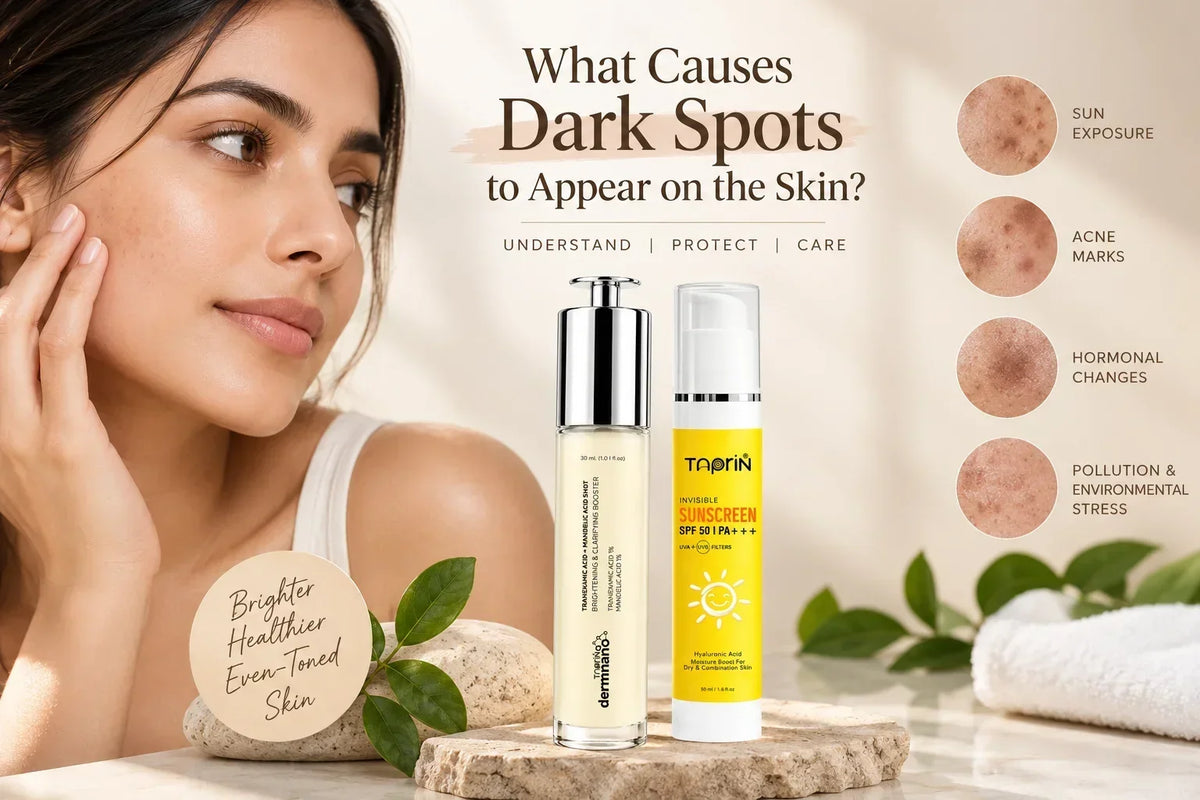
Dark spots are one of the most common skin concerns, and they can appear even when your overall skin looks healthy. They may develop after acne, repeated sun exposure, hormonal changes, irritation, or simply because the skin produces more pigment in certain areas. The important thing is to understand why the spots are appearing before choosing products or treatments.
Dark spots also do not always disappear quickly. Skin needs time to gradually improve its appearance, especially when pigmentation has been present for a long period. A consistent routine that focuses on sun protection, gentle care, and suitable brightening ingredients can make a meaningful difference over time.
Why Do Dark Spots Appear?
The skin naturally produces pigment that gives it its colour. When the skin experiences factors such as UV exposure, inflammation, or irritation, pigmentation can become more noticeable in particular areas. This may result in an uneven looking skin tone or visible dark spots.
1. Sun Exposure
One of the biggest contributors to visible pigmentation is regular sun exposure. UVA and UVB rays can affect the skin and contribute to tanning, pigmentation, and visible signs of premature skin ageing. This is why someone may notice darker areas on the face, forehead, cheeks, or around the mouth after spending considerable time outdoors.
Using an SPF 50 sunscreen as part of your daytime routine is therefore important. Cosworld's Taprin Invisible Sunscreen provides SPF 50 PA+++ protection and is designed to help protect against UVA and UVB exposure while avoiding a white cast.
2. Acne and Skin Inflammation
Dark marks can also develop after pimples or other forms of skin inflammation. Once the original concern settles, the skin may still look darker in that particular area.
This is why repeatedly picking or squeezing pimples can make the appearance of marks more noticeable. A gentle skincare routine is generally more useful than constantly changing products in an attempt to get faster results.
3. Hormonal Changes
Hormonal changes can influence pigmentation in some people. Darker patches may become more visible during certain hormonal periods, particularly around the cheeks, forehead, upper lip, or other areas of the face.
Because the underlying trigger can be different from person to person, treating pigmentation is not always about using a single brightening product. Understanding the possible cause helps you build a more sensible routine.
4. Irritation and an Unbalanced Routine
Too many active skincare products, excessive exfoliation, or harsh cleansing can leave the skin uncomfortable and irritated. When the skin is repeatedly stressed, existing pigmentation may appear more noticeable.
A simple routine is often easier to maintain. Cleansing, moisturising, daytime sun protection, and carefully selected targeted products can provide a more balanced approach.
How Can You Reduce the Appearance of Dark Spots?
Treating visible pigmentation requires patience. Instead of expecting one product to completely remove dark spots, focus on the habits that prevent them from becoming more noticeable while supporting a more even-looking complexion.
A tranexamic acid serum is one type of targeted skincare product commonly associated with improving the appearance of dark spots and uneven looking skin. It contains Tranexamic Acid and Mandelic Acid and is positioned for dark spots, pigmentation, acne marks, and skin clarity.
For everyday care, keep these habits in mind:
- Use sun protection consistently: Apply an SPF 50 sunscreen during the daytime and reapply when you are exposed to the sun for extended periods.
- Avoid unnecessary irritation: Harsh scrubbing, picking at blemishes, or frequently changing products can leave the skin more irritated and make pigmentation appear more noticeable.
- Follow a consistent routine: Skincare works better when it is followed regularly rather than when multiple products are used occasionally.
- Pay attention to new or changing spots: If a dark spot changes in size, shape, colour, or appearance, professional evaluation is a better choice than trying to treat it yourself.

Why Targeted Skincare Can Help
For people dealing with uneven-looking skin tone or pigmentation after sun exposure, targeted ingredients can be included as part of a broader skincare routine. A tranexamic acid serum, for example, can be considered when the aim is to support a more even-looking complexion. However, no single serum can address every possible cause of pigmentation, so identifying what is triggering the spots remains important.
For salon-based routines, an anti tan facial kit booster can also be incorporated when the objective is to enhance the overall facial-care process. Rather than treating it as a replacement for daily skincare, a booster can be used as an additional step within an appropriate facial routine.
Conclusion:
Dark spots can develop for several reasons, including sun exposure, post-blemish marks, hormonal changes, irritation, and other factors that influence melanin production. This is why treating pigmentation is not simply about finding one spot removing product. Understanding the possible cause and maintaining a consistent routine are equally important.


