
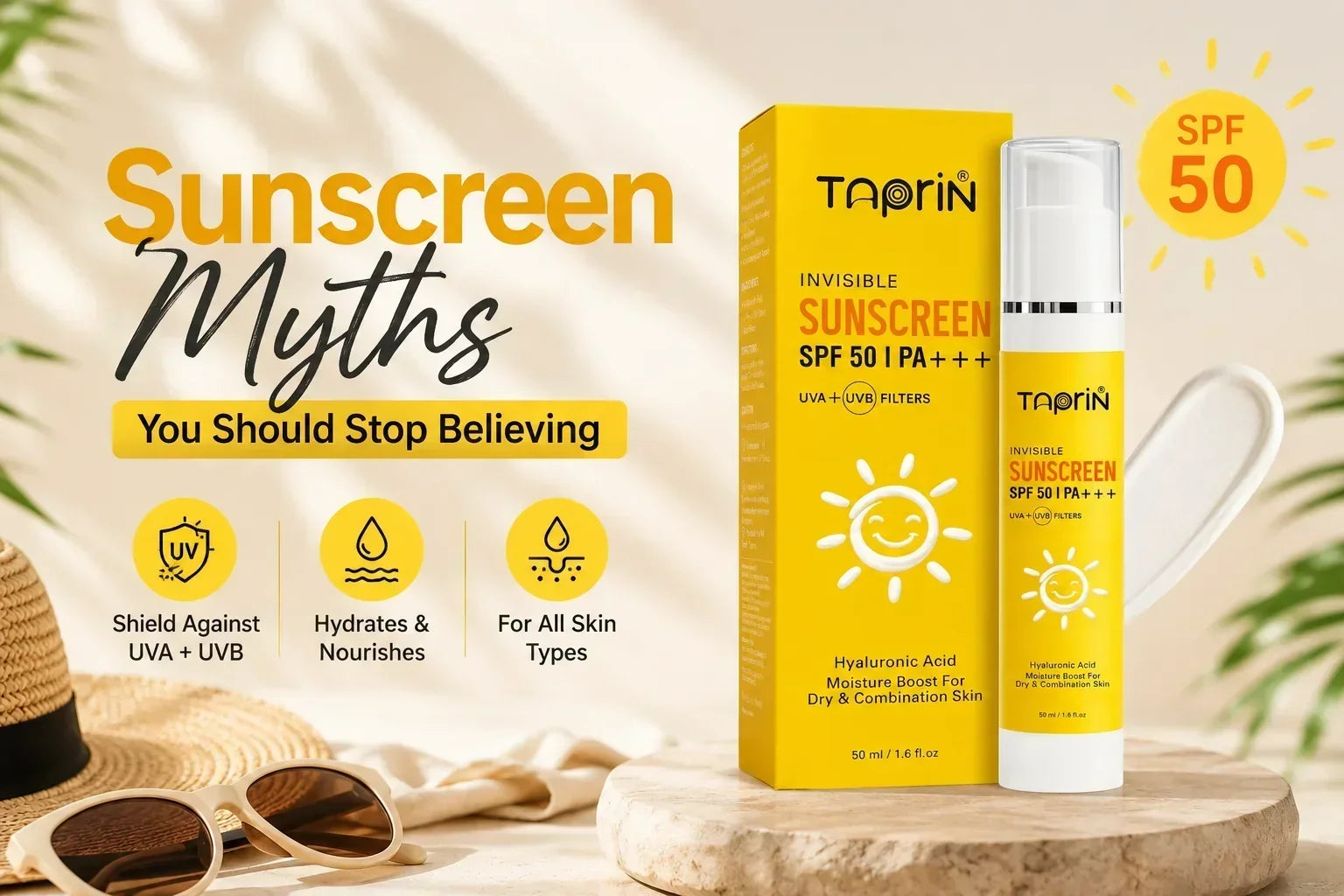
Sun protection is one of the most important parts of a skincare routine, yet it is also one of the most misunderstood. Many people skip sunscreen because of common myths they have heard from friends, social media, or outdated information. These misconceptions often lead to uneven skin tone, premature aging, tanning, and unnecessary sun damage.
Why Sun Protection Matters Every Day
The sun emits ultraviolet (UV) rays that reach your skin even when the weather appears cloudy. These rays are divided into UVA and UVB rays, both of which affect the skin differently.
UVA rays penetrate deeper into the skin and are associated with premature skin aging, while UVB rays are responsible for sunburn. Daily exposure to both can gradually affect the skin's appearance over time.
Myth 1: You Only Need Sunscreen on Sunny Days
This is one of the biggest misconceptions people believe. Clouds can block some sunlight, but they do not completely stop ultraviolet rays from reaching your skin. Even on overcast days, UV radiation remains present.
This means your skin continues to receive exposure whether you are walking outside, driving, or sitting near a window. Making sunscreen a daily habit is much more beneficial than using it only during vacations or beach trips.
Myth 2: Higher SPF Means You Never Need to Reapply
Many people assume that once they apply sunscreen in the morning, they remain protected all day. Sweating, touching your face, natural skin oils, and outdoor activities gradually reduce sunscreen performance throughout the day.
A Sunscreen with SPF 50 offers high sun protection, but it still requires reapplication, especially if you spend long hours outdoors. Proper application is just as important as choosing the right SPF.

Myth 3: People with Dark Skin Don't Need Sunscreen
Melanin naturally provides some protection against UV rays, but it does not completely prevent sun damage.
People with darker skin tones can still experience:
-
Uneven pigmentation
-
Sun induced discoloration
-
Premature signs of aging
-
Skin barrier damage
Myth 4: Sunscreen Prevents Your Body from Getting Vitamin D
Many people avoid sunscreen because they worry it will stop vitamin D production. In reality, normal daily activities provide enough sunlight exposure for most people.
No sunscreen blocks 100% of UV rays, and some sunlight still reaches the skin during routine outdoor movement. For people who require additional Vitamin D, healthcare professionals usually recommend dietary sources or supplements rather than avoiding sunscreen altogether.
Myth 5: Indoor Workers Don't Need Sunscreen
Working indoors does not automatically eliminate UV exposure. Natural daylight enters through windows, and UVA rays can penetrate glass. If your workstation is close to a window or you drive frequently during the day, your skin still receives UV exposure.
People who spend most of their day indoors can also benefit from applying sunscreen as part of their morning skincare routine.
Myth 6: Sunscreen Is Only for the Face
Many skincare routines focus only on protecting facial skin.However, areas like the neck, ears, hands, shoulders, and arms are also exposed to sunlight every day.
Ignoring these areas may lead to uneven tanning and visible differences in skin tone.Whenever you apply sunscreen, remember to protect all exposed skin.
Myth 7: Makeup with SPF Is Enough
Many cosmetic products mention SPF on their packaging.Although these products provide some level of protection, they are generally not applied in sufficient quantity to replace sunscreen.
Using a dedicated sunscreen first and then applying makeup helps provide more reliable protection during daily activities.
Understanding What SPF 50 Actually Means
Many people believe SPF numbers represent the number of hours sunscreen lasts. SPF measures how effectively a sunscreen helps protect the skin from UVB rays under proper application.
A Sunscreen with SPF 50 offers a high level of UVB protection, but factors such as sweating, swimming, and friction still require timely reapplication. The effectiveness depends not only on SPF but also on how evenly and generously it is applied.
Building a Simple Daily Sun Protection Routine
Healthy skincare habits are easier to maintain when they become part of a routine.
A basic morning routine may include:
-
Cleanse the skin.
-
Apply moisturizer if needed.
-
Use sunscreen before stepping outdoors.
-
Reapply during extended outdoor activities.
Conclusion:
Sunscreen myths often prevent people from protecting their skin consistently. Believing that sunscreen is only needed during summer, that darker skin doesn't require protection, or that a single morning application lasts all day can reduce the effectiveness of your skincare routine.


