
Your skin barrier is like a protective shield, keeping harmful elements out and it also helps locking moisture in and stay healthy. When this protective layer gets compromised, your skin may start showing various signs that something is wrong. Understanding the signs of a damaged skin barrier and knowing how to repair it can help restore your skin's health and appearance.
Signs of a Damaged Skin Barrier
Dryness and Tightness
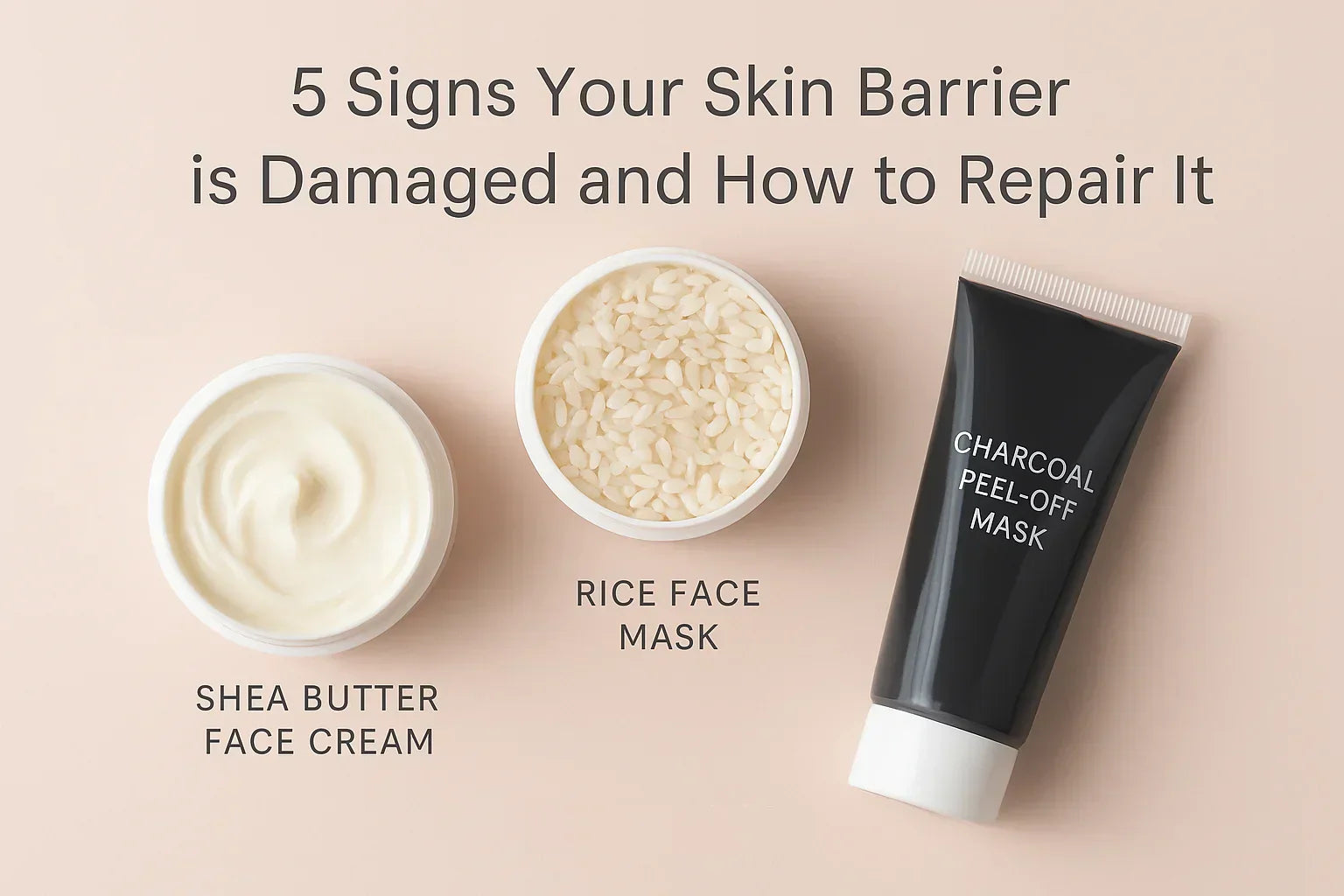
When your skin barrier is compromised, moisture escapes quickly, leaving your skin feeling rough or tight even after applying moisturizer. This is often one of the first signs of barrier damage. To help repair it, using a nourishing moisturizer shea butter face cream can be highly effective. Shea butter is rich in fatty acids, which restore hydration and strengthen the lipid barrier, helping your skin retain moisture and feel soft and supple.
Redness and Irritation
A weakened skin barrier makes your skin more reactive. You may notice redness, inflammation, or stinging, particularly after using certain skincare products or when exposed to harsh weather conditions. To calm irritation, using gentle and soothing products into your routine is essential. Using a rice mask for face once or twice a week can help reduce redness while gently exfoliating and nourishing the skin, allowing it to recover more efficiently.
Flakiness and Rough Texture
Damaged skin often appears flaky or uneven, with rough patches that feel coarse to the touch. This happens because the skin barrier cannot retain moisture or shed dead cells properly. To restore smoothness, gentle exfoliation is key. A charcoal peel-off mask works well to remove trapped impurities, refine the skin’s texture, and support the skin barrier without causing further irritation or dryness.
Increased Sensitivity to Products
If your skin suddenly reacts to creams, serums, or cleansers that previously caused no issues, it could indicate a compromised barrier. Burning, stinging, or irritation may occur more easily. In this case, simplifying your skincare routine is crucial. Focus on products free from alcohol, fragrances, or strong acids to reduce stress on the skin and allow it to rebuild its protective layer gradually.
Frequent Breakouts
A damaged barrier allows bacteria and impurities to penetrate more easily, leading to clogged pores and breakouts. Even if your skin is normally clear, a weakened barrier can trigger irritation and acne. To protect your skin, use a gentle cleanser and avoid over-washing. Maintain hydration with shea butter face cream and support weekly care with a rice mask for face and a charcoal peel-off mask, which help balance and strengthen your skin over time.
How to Repair Your Skin Barrier
-
Hydration is Key: Applying a nourishing moisturizer daily is essential to restore lost moisture. Using shea butter face cream can help reinforce the skin’s protective layer. For extra hydration, layering lightweight serums can boost moisture levels without clogging pores.
-
Gentle Cleansing: Avoid harsh cleansers that strip natural oils from your skin. Incorporate a rice mask for face or charcoal peel-off mask once a week to deeply cleanse without damaging the barrier. Always pat your skin dry gently instead of rubbing to minimize irritation.
-
Sun Protection: Daily use of broad-spectrum sunscreen helps prevent UV damage, which can further weaken your skin barrier. Protect your skin from prolonged exposure to harsh weather or sun.
-
Healthy Daily Habits: Hydration from within is important, so drink plenty of water daily. Eat a balanced diet rich in vitamins, antioxidants, and healthy fats to support skin repair. Managing stress, getting adequate sleep, and avoiding overuse of skincare products are equally crucial for barrier recovery.
Additional Tips for Stronger Skin Barrier
-
Avoid long, hot showers that strip natural oils.
-
Limit chemical exfoliation; stick to mild, barrier-friendly ingredients.
-
Maintain consistency—repairing your skin barrier takes patience and a regular routine.
-
Keep track of your skin’s reactions and adjust products accordingly.
Conclusion:
A damaged skin barrier can make your skin feel tight, irritated, and prone to breakouts, but the right care can restore its strength and health. Focus on hydration, gentle cleansing, sun protection, and healthy habits. With patience and consistent care, your skin will regain its natural resilience, glow, and balance.


