
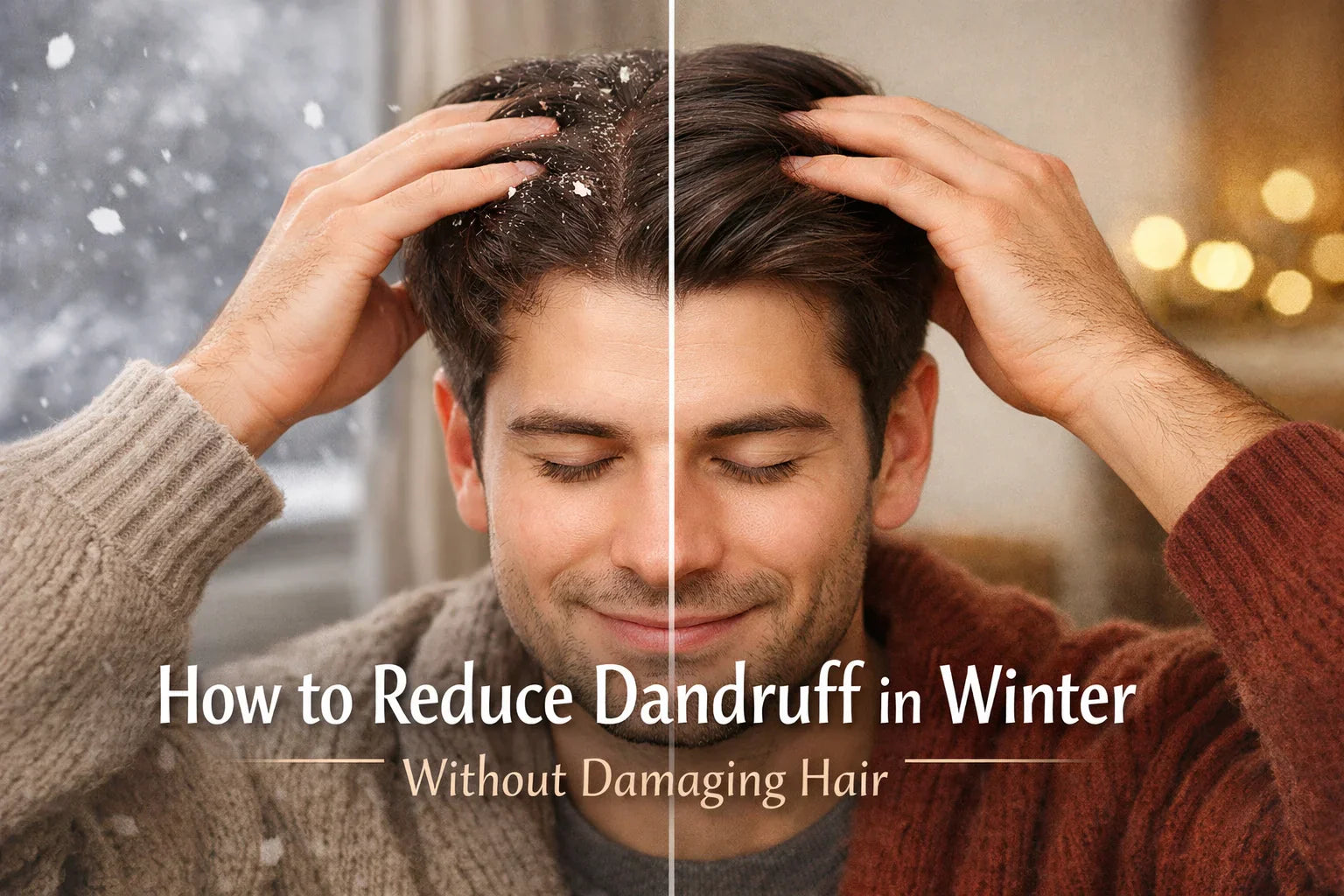
Winter can be comfortable for us, but it is often harsh on our hair and scalp. Cold weather, dry air, indoor heaters, and hot water showers can disturb the natural balance of the scalp. As a result, many people experience dandruff during winter. The flakes, itching, and dryness can be frustrating, especially when hair also becomes rough and weak.
The good news is that winter dandruff can be controlled without damaging your hair. With the right care, gentle cleansing, and proper nourishment, you can maintain a healthy scalp and soft hair throughout the season.
Why Dandruff Gets Worse in Winter
Dandruff is closely linked to dryness and an unhealthy scalp balance. During winter, the scalp loses moisture much faster than usual, which makes flakes more noticeable. Some common winter triggers include:
-
Cold air reduces moisture in the scalp
-
Indoor heating systems dry out natural oils
-
Hot showers strip essential scalp hydration
-
Harsh shampoos weaken the scalp barrier
-
Lack of nourishment makes flakes more visible
The Right Way to Clean Your Scalp in Winter
Cleaning your scalp is important, but in winter, how you cleanse matters even more. Washing too often or using harsh shampoos can dry out the scalp further and make dandruff worse.

During winter, the scalp needs a cleanser that removes flakes and dirt without stripping away natural oils. A gentle option like amla shampoo helps keep the scalp clean while maintaining its natural balance. Amla is known for supporting scalp health and strengthening hair roots, which makes it suitable for regular winter care.
Tips for shampooing in winter:
-
Wash hair 2–3 times a week, not daily
-
Use lukewarm water instead of hot water
-
Massage gently, avoid scratching
-
Rinse thoroughly to prevent product buildup
Moisturizing the Scalp Without Making It Oily
When dealing with dandruff, many people focus only on cleaning the scalp. But dryness is often the real problem and dry scalp needs moisture, not harsh treatments. After shampooing, both the scalp and hair lose natural hydration, especially during winter. This is why nourishment is just as important as cleansing. A deep conditioning step helps restore lost moisture and keeps hair soft and manageable.

A Moroccan argan spa mask works well during winter because it provides hydration without making the scalp greasy. Argan oil is known for its moisturizing and smoothing properties, which help calm dryness and improve hair texture in cold weather.
Using a Moroccan argan spa mask once a week can:
-
Reduce dryness caused by winter air
-
Improve hair softness and shine
-
Prevent hair from becoming brittle
-
Support a healthier scalp environment
This step ensures that treating dandruff does not lead to rough or damaged hair.
How to Use a Balanced Winter Hair Routine
To reduce dandruff safely, your routine should focus on both cleansing and care.
A simple winter routine looks like this:
-
Cleanse your scalp using AMLA SHAMPOO
-
Avoid harsh rubbing and hot water
-
Apply a Moroccan argan spa mask to nourish hair lengths
-
Let the mask sit for a few minutes before rinsing
-
Allow hair to air dry when possible
Common Mistakes That Make Dandruff Worse
Even good products can fail if habits are wrong. Avoid these common winter mistakes:
-
Washing hair daily
-
Using very hot water
-
Skipping conditioner or mask
-
Scratching flakes aggressively
-
Using too many styling products
When to Expect Visible Improvement
Winter dandruff does not disappear overnight. With gentle care, you may notice:
-
Reduced itching within a week
-
Fewer flakes in 2–3 weeks
-
Improved hair texture over time
Conclusion:
Winter dandruff is common, but it does not have to damage your hair. The key is understanding that dry scalp needs gentle cleansing and proper nourishment. Avoid harsh treatments and focus on restoring balance.


